
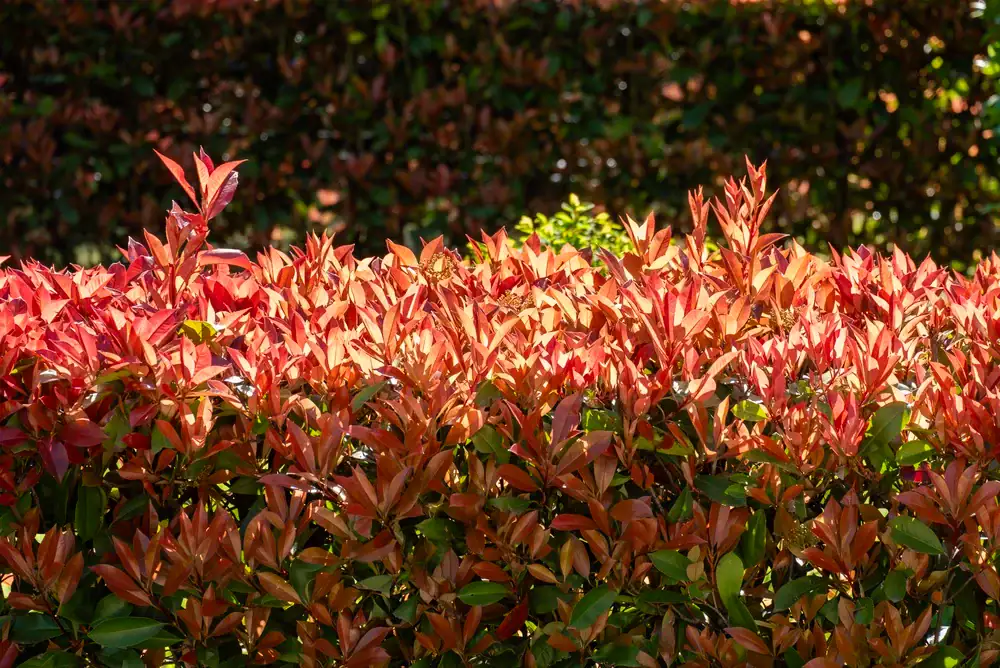
Photinia is one of the most versatile and striking shrubs you can choose for a Mediterranean garden. Its most recognizable feature is the intense red new foliage that emerges in spring and autumn, providing a color contrast that few other shrubs can match. In Mallorca, where green dominates the landscape year-round, Photinia adds a splash of color while requiring hardly any maintenance.
What is Photinia?
Photinia is an evergreen shrub native to East Asia, widely used in Mediterranean landscaping due to its hardiness, rapid growth, and ornamental appeal. It can reach a height of 3 to 5 meters if allowed to grow freely, although it responds very well to pruning and maintains a compact shape with little effort.
Its main attraction is its color: new shoots emerge in shades of bright red or copper, gradually shifting to a glossy dark green as they mature. This cycle repeats in spring and autumn, giving the plant a dynamic, ever-changing appearance throughout the year.
Main Photinia varieties in Mallorca
Photinia xfraseri ‘Red Robin’
It is the most popular variety for ornamental gardening and the most widely available in Mallorca. Its new leaves are a particularly intense, brilliant red, and its compact habit makes it ideal for both hedges and standalone shrubs. It is the most common choice for residential gardens and housing developments. In addition to its foliage, it produces small white flowers in spring that attract pollinators.
Photinia x fraseri
The standard variety, slightly more vigorous than ‘Red Robin’. It grows somewhat faster and produces more foliage, making it especially useful when a dense privacy screen is desired in a short time.
For Mediterranean gardens in Mallorca, Red Robin is the most recommended choice due to its manageable size and more intense color.
Uses in the garden
Hedge and privacy screen. When planted in a row and regularly pruned, it forms a dense, colorful hedge that combines functionality and aesthetics better than many other options.
A standalone ornamental shrub. Allowed to grow freely with only occasional pruning, the Photinia develops into an impressive shrub that serves as a focal point in the garden.
Garden backdrop. Its glossy, dark green foliage works very well as a backdrop for flowering plants or those with lighter-colored foliage.
Low-maintenance gardens. Once established, it withstands the Mallorcan summer drought well and requires no special care between prunings.
Photinia Care in Mallorca
Photinia Placement
It prefers full sun or partial shade. In Mallorca, an exposure that offers some shade during the hottest part of the day can protect young leaves from scorching during the hottest months.
Watering Photinia
It requires regular watering during the first year to become established. Once rooted, it tolerates periods of drought, although moderate watering in summer improves its appearance and encourages autumn growth. Always avoid waterlogging.
Ground
It adapts to most soil types, including the calcareous soils typical of Mallorca. It prefers well-drained soils rich in organic matter for optimal development.
Pruning: the key to maximizing red color
Every time Photinia is pruned, it produces a new flush of red shoots—the more pruning, the more color throughout the year. The best time to do this in Mallorca is:
Late winter (February–March): main pruning to stimulate the first red spring shoot.
Late summer (August–September): light pruning to stimulate autumn growth.
Important: Never cut back to the woody part where there is no green foliage—those branches will not resprout.
Diseases
The main problem is leaf spot caused by the *Entomosporium* fungus, which appears as reddish spots on mature leaves. It is prevented by ensuring good air circulation between plants, avoiding overhead irrigation, and applying preventive fungicide treatments in the spring.